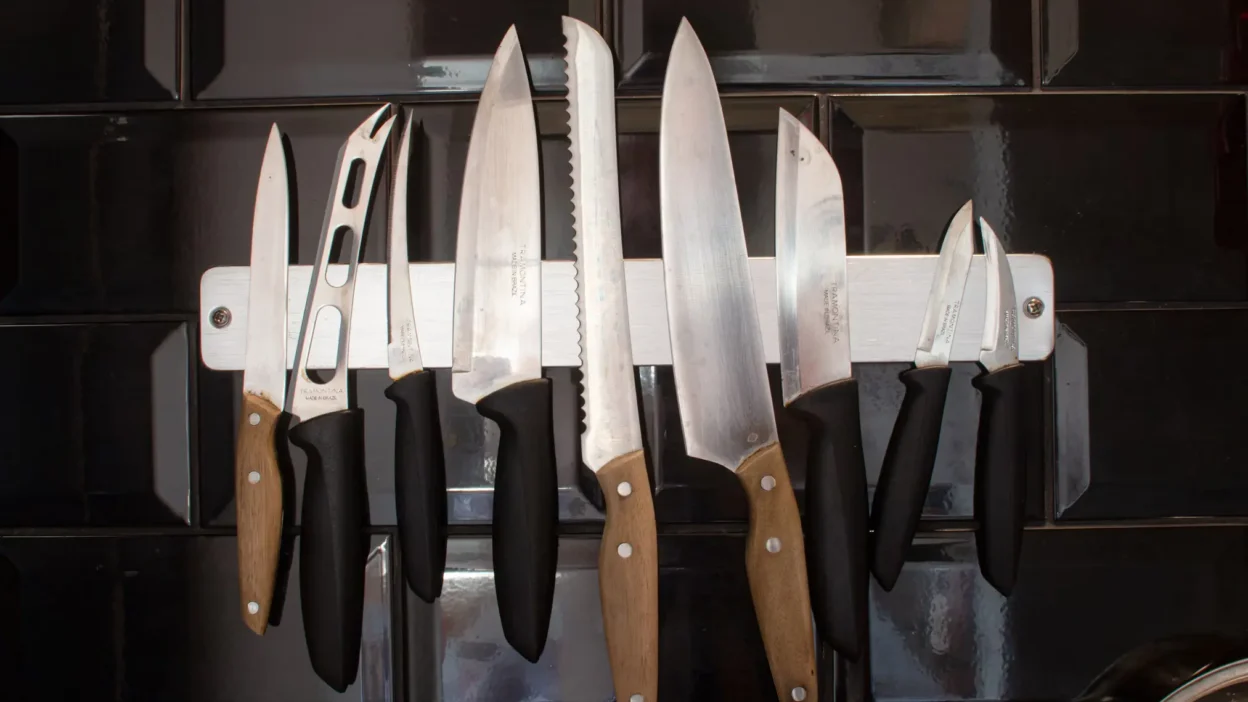
Having the right knife for the right task is fundamental to cooking, and this holds true in Indian kitchens as well. In this comprehensive guide, we’ll introduce the essential types of kitchen knives and their uses, with a special focus on the Indian cooking context. From the heavy-duty cleavers used to break coconuts and cut meat, to the small paring knives deftly maneuvered by home cooks for chopping vegetables in hand, we’ll cover it all. Consider this an “Indian edition” of kitchen knives – blending standard knife knowledge with the unique ways they’re used in Indian culinary culture.
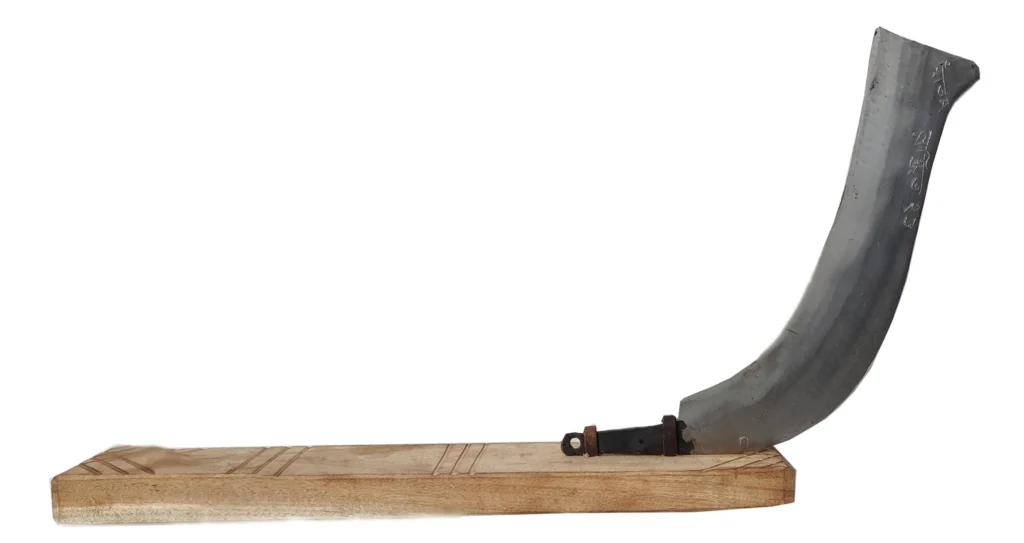
Knives in the Indian Kitchen – A Brief Overview: Traditional Indian cooking historically did not rely on a wide array of specialized knives. In many homes, one or two simple knives got every job done. You might have seen an Indian auntie sit on the kitchen floor, holding a vegetable in one hand and a small knife in the other, slicing directly into her palm with amazing speed and precision. Indeed, “paring knives are commonly used for many tasks” in India, and many people managed with a basic small knife for everything from peeling to chopping. In rural or old-school settings, you might even find the boti, a traditional cutting instrument where a curved blade is fixed to a wooden base and the cook uses both hands to press ingredients against it. In Bengal, for example, the boti was ubiquitous for cutting fish and veggies – it requires skill but slices with ease. These traditional tools are fascinating, though they’re gradually being replaced by modern knives as habits change and quality knives become widely available.
Today, Indian kitchens (especially in urban areas) use a mix of the old and new. Most home cooks now embrace chef’s knives, serrated bread knives, and other Western-style knives for efficiency. Yet, the preference for a small handy knife remains – it’s not uncommon to see someone peel potatoes or dice an onion with a little knife while holding it in the hand (no chopping board), a technique passed down through generations. With that context in mind, let’s dive into the essential kitchen knives you should know about and how they are used, particularly with Indian cooking needs in focus.
Essential Kitchen Knives and Their Uses
Below is a handy table summarizing the most common types of kitchen knives, their key characteristics, and their primary uses (including notes on Indian usage where relevant):
| Knife Type | Description | Common Uses (Indian context) |
|---|---|---|
| Chef’s Knife | All-purpose large knife (usually 8–10 inches). Broad, curved blade for rocking motion; pointed tip. | Chopping, dicing, and mincing vegetables (onions, tomatoes, etc.), herbs, and nuts; slicing boneless meats. Workhorse of the kitchen – great for prepping veggies for curries or chopping onions/tomatoes for masala. |
| Paring Knife | Small (3–4 inch) knife with a straight sharp blade and pointed tip. Light and maneuverable. | Peeling and paring fruits/vegetables (e.g. peeling potatoes, apples), trimming and coring, making precise cuts. Often used in Indian homes to cut vegetables in hand; perfect for tasks like de-veining chilies or slicing garlic cloves. |
| Utility Knife | Medium-sized knife (5–6 inches), midway between a chef’s and paring knife. Narrower blade. | General purpose slicing and cutting of mid-sized produce and foods – e.g. slicing cucumbers, cutting sandwiches, segmenting citrus. Good for tasks that are too big for a paring knife and too small for a chef’s knife. |
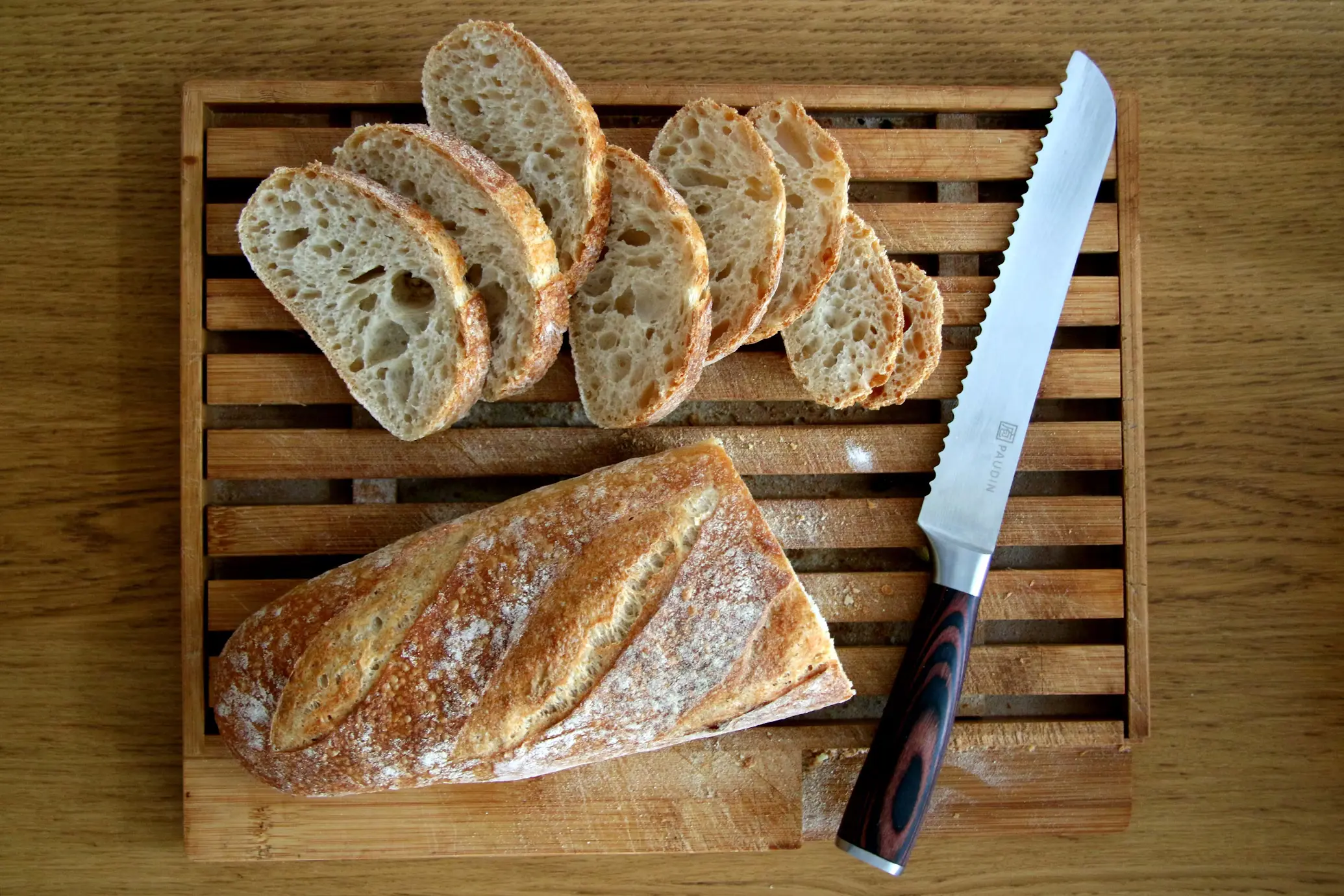
| Bread Knife (Serrated) | Long (8–10+ inch) knife with a serrated “sawtooth” blade. | Slicing breads, cakes, and pastries without crushing. Also excellent for slicing foods with hard exterior, soft interior (tomatoes, citrus, melons). In Indian kitchens, this is handy for bakery bread, pav buns, and even for neatly slicing ripe tomatoes and big fruits like watermelon. |
| Cleaver (Butcher’s Knife) | Large, rectangular-bladed heavy knife. Thick spine for weight. | Chopping through bones and hard foods – e.g. cutting meat into curry pieces, hacking through poultry bones, splitting crab or lobster. Common in non-vegetarian Indian kitchens for butchering meat (e.g. goat, chicken) and also cracking coconuts or large pumpkins/yams. |
| Boning Knife | Slim, pointed knife (5–6 inches), often with slight flexibility. Sharp edge and pointed tip. | Removing bones and skinning meat or fish. Filleting fish, trimming fat and sinew from meat. Useful for preparing whole fish (like cleaning a pomfret) or frenching lamb chops in Mughlai cuisine. In many Indian homes, fish is bought pre-cut, but enthusiasts use this for precise butchery. |
| Santoku Knife | A Japanese-origin knife (5–7 inches) with a straight edge and sheepsfoot curved tip; often has granton (dimples) on blade. “Santoku” means “three virtues” (slicing, dicing, mincing). | An alternative to the chef’s knife for fine chopping and slicing, particularly vegetables, fish, and boneless meats. Gaining popularity in India for veggie prep – great for chopping onions, shredding cabbage or slicing paneer. Its flatter blade is superb for straight-down cuts (no rocking needed). |
| Carving/Slicing Knife | Long, narrow blade (8–12 inches) with a sharp pointed tip (carving knife) or rounded tip (slicing knife). | Carving cooked meats (roasts, whole tandoori chicken) into thin slices; slicing large fruits and cakes. In Indian context, used occasionally for carving a roast (if making whole roasted chicken or turkey) or slicing layered biryani pots, but not very common in daily use. |
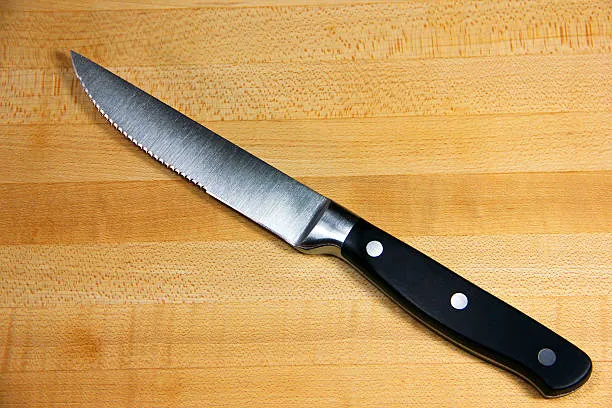
| Steak Knife (Dining knife) | Small serrated knife used at the table. Usually comes in sets. | Meant for cutting steak or grilled meats on the plate. In India, not a kitchen prep tool but used in restaurants/homes when serving western-style grilled meats or dishes like steak or kebabs. |
As we see, there’s some overlap in what knives can do, but each has specialties. In a typical Indian home kitchen, you will almost always find a chef’s knife (or Santoku), a paring knife, and a bread/serrated knife as a basic trio. These cover most tasks: the chef’s knife for bulk chopping and dicing, the paring knife for fine work and peeling, and the serrated knife for bread and tricky produce.
In many Indian households, cooks still use a small knife and their hand as a cutting board – a traditional technique for chopping vegetables. This image shows how an Indian home cook might peel or cut an onion by holding it and slicing with a paring knife (or a similar small knife) against the thumb. It’s a skill that requires practice and a very sharp knife to do safely. The advantage of this method is speed and convenience – no separate cutting board to clean up. You’ll see this often for quick tasks like cutting okra directly into a bowl or slicing mangoes for pickles. However, using a proper cutting board with a chef’s knife is generally safer and allows for faster large-scale chopping (plus saves your fingers!). Modern Indian cooking, especially in urban settings, has largely shifted to the cutting board approach for efficiency, but the traditional hand-cutting technique is still alive in many homes.
Let’s now go through the key knives one by one and discuss their uses in more detail, especially how they come into play in preparing Indian cuisine:
1. Chef’s Knife (Chef Knife)
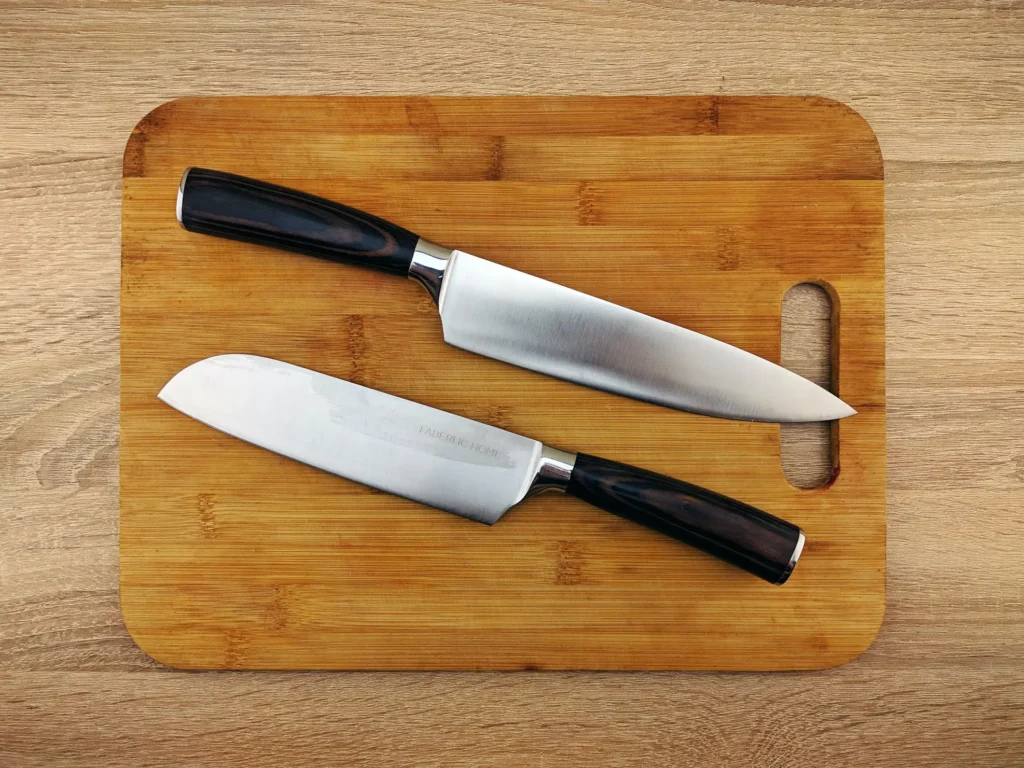
A chef uses a large chef’s knife to chop broccoli – showcasing the knife’s versatility for all kinds of vegetable prep. The chef’s knife is often called the workhorse of the kitchen – and for good reason. This is a large, all-purpose knife with a broad blade that tapers to a point. Its curved edge allows a rocking chopping motion. In Indian cooking, a chef’s knife is invaluable for chopping onions, tomatoes, chilies, and pretty much any vegetable that goes into your curries and sabzis (stir-fries). Need to finely chop a pile of onions for biryani? Or shred a cabbage for coleslaw or poriyal? The chef’s knife has you covered. It’s also great for mincing herbs (like coriander leaves) and crushing garlic cloves (using the side of the blade). Many Indian cooks also use it to slice boneless meats (like cutting chicken breast for tikka or mutton chunks for stew).
A good chef’s knife typically has an 8-inch blade (some prefer 10-inch for extra leverage). It might feel large at first if you’re used to small knives, but once you get comfortable, you’ll appreciate how its weight and size actually make big chopping jobs faster. Tip: Use the front part of the blade (near the tip) for delicate work (like mincing ginger or garlic), and the back part (near the handle) for heavy-duty chopping (like dicing potatoes or carrots). For Indian cooking, where prep often involves a LOT of chopping (think of all those onions, tomatoes, ginger, garlic, chilies that form our masala bases), the chef’s knife is truly your best friend. Investing in a sharp, comfortable chef’s knife can drastically reduce your prep time and hand fatigue.
2. Paring Knife
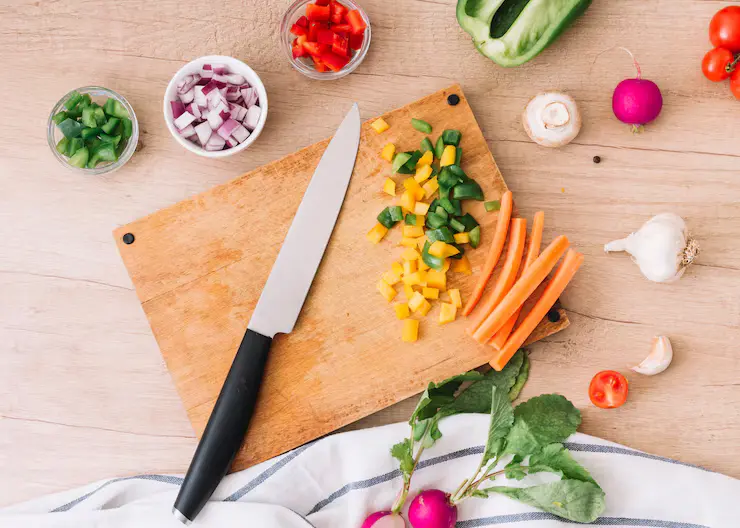
In contrast to the chef’s knife, the paring knife is small, lightweight, and designed for precision. It usually has a blade around 3 to 3.5 inches. Paring knives are ideal for peeling fruits and vegetables, trimming, and making small precise cuts. In an Indian kitchen, you’ll grab the paring knife to peel apples for chutney, skin pears, or devein prawns. It’s perfect for slicing small items like a clove of garlic, segmenting an orange, or cutting a small piece of ginger. If you need to remove the seeds from a chilli or carve a decorative pattern in a vegetable (for those fancy salad presentations), a paring knife is the tool to use.
As mentioned earlier, many Indians historically used just a small knife for almost everything. Even today, some experienced cooks wield a paring knife to dice an onion in their palm with impressive speed. While we don’t necessarily recommend copying that technique without practice (safety first!), it shows the versatility of a good paring knife. One can peel and chop an apple or potato in hand over a trash bin – no cutting board needed – which makes prep and cleanup quicker for small tasks.
For peeling tough-skinned vegetables common in Indian cuisine – like pumpkin, karela (bitter gourd), or plantains – a sharp paring knife works wonders (though some prefer a peeler for thin skins). Keep your paring knife sharp; because it’s small, you may unconsciously use more pressure and a dull blade can slip. A sharp paring knife will glide through tomato skins and ginger knobs with ease, giving you neat results.
3. Utility Knife
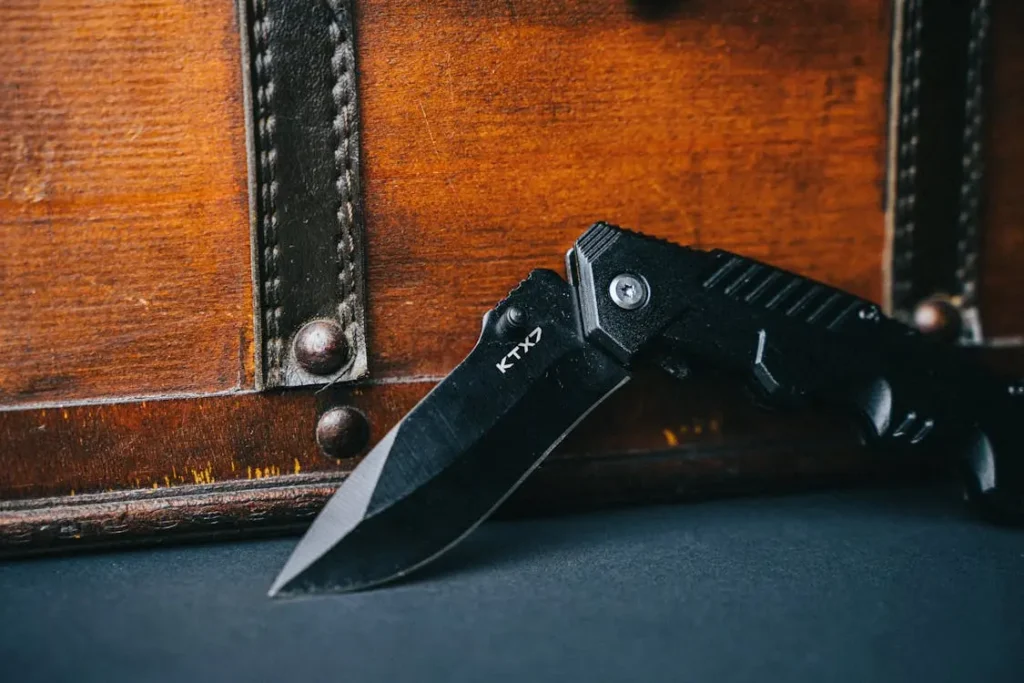
The utility knife is like the middle child between the chef’s and paring knife. With a blade around 5 inches, it handles tasks that are a bit too large for the paring knife but not heavy-duty enough for the chef’s. Think of slicing a sandwich, cutting a block of paneer, or halving a cucumber – a utility knife feels just right in these cases.
In many Indian knife sets, the utility knife often has a straight edge (sometimes slightly serrated) and comes in handy for everyday tasks. If you’re making a quick veggie sandwich, you can slice the tomatoes and cucumbers with the utility knife, then use it to cut the sandwich itself. It’s also useful for slicing chilies lengthwise (for mirchi pakoras, perhaps) or cutting small fruits like kiwi, plums, etc.
While not absolutely essential (one could manage these tasks with either a chef’s or paring knife), the utility knife adds convenience. Many Indian home cooks who are not fully comfortable with a big chef’s knife end up using a utility knife for a lot of chopping since it feels easier to control due to its smaller size and lighter weight. It’s a nice in-between tool – if your chef’s knife is busy chopping onions and you quickly need to slice a lemon, you might reach for the utility knife instead of cleaning the big knife.
4. Bread Knife (Serrated Knife)
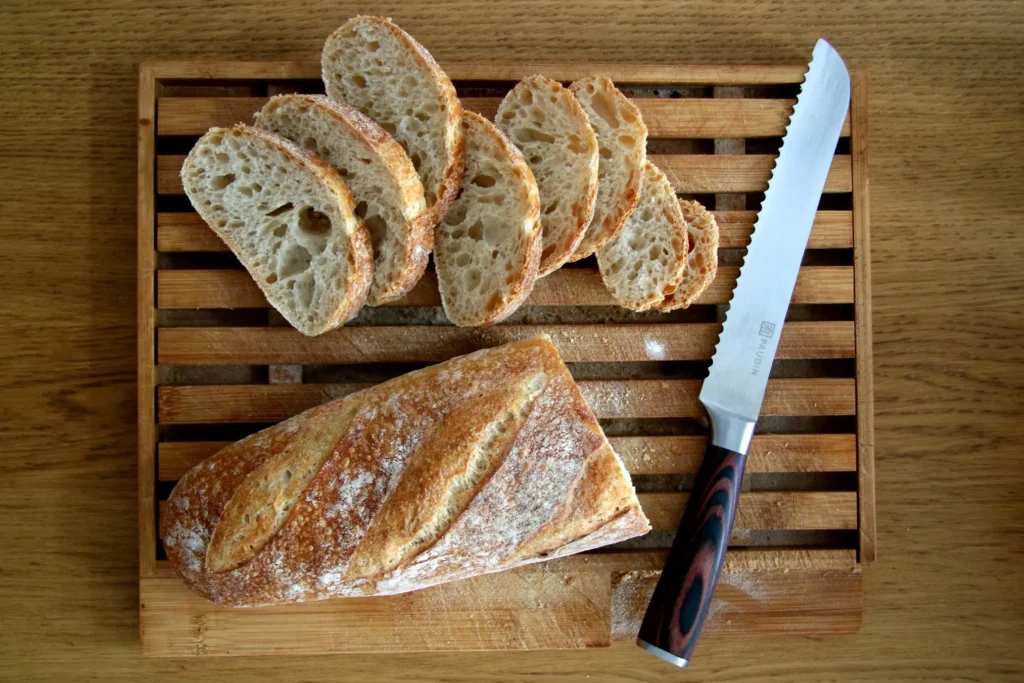
A bread knife is instantly recognizable by its long blade with serrated edges (it looks like a saw). This design allows it to cut through items with a hard crust or skin and soft interior without squashing them. The classic use is, of course, slicing bread – from crusty loaves to soft sandwich bread – in neat, even slices. In India, if you enjoy bakery bread, buns, or homemade sandwiches, a bread knife is a must for clean cuts. It’s also what you’d use to slice cake layers (like for making layered pastries or cutting a homemade cake neatly).
But beyond bakery items, the serrated knife is surprisingly useful for certain produce. For example, slicing ripe tomatoes – a serrated blade cuts through the skin cleanly where a straight blade might struggle or crush the tomato. Citrus fruits (oranges, lemons) also yield nicely to a serrated knife, which grips their waxy skin. Cutting large fruits like pineapple or watermelon? The serrated knife’s sawing action helps start the cut and go through thick rinds. Even for tough gourds and squashes (pumpkin, karela, etc.), a bread knife can initiate a clean cut with less slipping, which is safer.
In the Indian kitchen context, one might use the serrated knife to slice pav (dinner rolls) for pav bhaji, or to halve a burger bun when making Mumbai vada pav. If you’re into baking, you’ll definitely need it for slicing breads and cakes. It’s also great for cutting through a stack of rotis or parathas in one go (say, to make kathi roll halves or to cut leftover rotis into strips for a stir-fry).
An added benefit: serrated knives stay sharp longer since their saw-like teeth reduce friction on the blade’s edge. Avoid using them on meat or fish (except maybe something like a roasted meat with a crust) – that’s not their forte and it’s hard to maneuver around bones with a serrated blade. Also, don’t use them to chop (no rocking cuts); they are for sawing motions. A quality bread knife can last years without needing sharpening, making it a low-maintenance but very handy tool in your arsenal.
5. Cleaver (Meat Cleaver / Heavy Chopper)

When you think of a butcher at work, you likely imagine a cleaver – that big, rectangular blade that can cut through bones. In Indian markets, you’ll see the butcher swinging a cleaver to portion meat (especially goat or lamb for curries). The cleaver is characterized by its weight and blunt force. It has a thick spine (back of the blade) which adds heft, allowing it to drop through tough stuff. The edge is sharpened at a more robust angle to prevent chipping when hitting bone.
For a non-vegetarian Indian kitchen, a cleaver is extremely useful if you buy whole chickens or large cuts of meat and need to break them down at home. Want to cut a whole chicken into smaller pieces for curry? A cleaver lets you chop through bones (like leg bones or backbone) relatively easily. It’s also great for ribs and tougher cuts that you might use in soups or stews. Another common use is fish – for instance, cutting through fish heads or sectioning a large fish like Rohu into steaks (which in Bengali cuisine is common). While many nowadays get meat pre-cut from the shop, some prefer to do it at home for precise sizing, and a cleaver is ideal.
A heavy cleaver being used to slice through meat on a cutting board. The weight of the cleaver makes cutting through flesh and bone more efficient. In Indian cooking, beyond meats, the cleaver has some unique uses. Cracking open a mature coconut, for example, can be done with the back of a cleaver – a few confident whacks around the shell and it splits open. Need to chop a large pumpkin or squash? The cleaver’s weight helps drive through the hard vegetable (some also use a serrated knife for initial cut, then cleaver to break it down). It’s also handy for shredding a bunch of cabbage finely – Chinese cuisine uses cleavers for practically everything, and Indian cooks can similarly use it to mince or shred veggies by rocking it (provided it’s sharp enough).
One thing to note: cleavers can be intimidating and are overkill for delicate work. They’re not for filleting or any task requiring finesse – they’re about power. Also, using a cleaver safely means keeping your other hand well out of the way and possibly using a wooden or silicone mallet to tap it through bones if needed rather than pure muscle. In summary, use your cleaver when brute force is needed – you’ll save your other knives from damage. And if you’re vegetarian, you might not need one at all, unless you want it for coconuts or big veggies. Some people also like Chinese vegetable cleavers (which are thinner and lighter than meat cleavers) as multipurpose knives – but that’s more a specialty and not traditional to India.
6. Boning Knife (Fillet Knife)

Source: Shutterstock (https://www.shutterstock.com/image-photo/sharp-boning-knife-isolated-on-whited-1892985628)
A boning knife is a specialty knife designed to get meat off the bone with precision. It has a slim, usually 5-6 inch blade that may be slightly flexible (especially fillet knives for fish). The tip is very sharp and pointed, which allows you to probe and cut along bones, cartilage, and joints.
In Indian cooking, you might use a boning knife when dealing with large cuts of meat or whole poultry. For example, if you buy a whole leg of goat (which is common for special dishes), a boning knife can help you debone and cut the meat into pieces for a curry, while preserving the bone for soup or stock. If preparing a fish fry from a whole fish, you might fillet the fish (e.g., a large pomfret or rawas) to get boneless pieces – a fillet knife (a type of boning knife) is ideal for sliding under the fish’s flesh and above the ribcage to lift out a fillet cleanly.
Another use: butterflying meats or seafood. If you want to butterfly a chicken breast (for stuffing it) or devein and butterfly large prawns for tandoori dishes, a boning knife’s control and sharp tip make it easier. It’s also useful for trimming fat off meat. For instance, removing the silver skin from a slab of mutton or trimming excess fat from pork (though pork is less common in Indian cuisine, except perhaps in certain Goan or Northeastern dishes) – a boning knife helps you slice off just the unwanted bits without gouging the meat.
In daily Indian cooking, a boning knife isn’t used as frequently as the main knives, especially if one buys meat pre-cut. But for enthusiasts or those who prefer whole birds and large cuts for freshness (like buying a whole chicken to cut into parts, or breaking down a large chunk of buffalo meat), it’s very handy. It allows cleaner cuts and less wastage of meat compared to using a clumsier large knife. Remember to keep it extremely sharp – the whole point is finesse, and a dull boning knife is frustrating and dangerous as you’ll apply too much force near slippery raw meat and bone. Also, be mindful of the flexible blade; don’t twist it too hard to pry bones or it might snap – that’s what cleavers are for.
7. Santoku Knife

The Santoku is a Japanese knife that has gained global popularity, including in India in recent years. “Santoku” roughly means three virtues – typically interpreted as the knife being good for slicing, dicing, and mincing. In shape, Santoku knives are shorter and lighter than Western chef’s knives. They usually have a straight (or slightly curved) cutting edge and a rounded tip (sometimes almost a sheepsfoot shape where the spine curves down to meet the edge). You’ll often see a row of dimples (granton edge) on the blade; these help reduce food sticking to the knife when slicing thin pieces.
For practical uses, Santokus cover much of the same ground as chef’s knives. They are excellent for chopping vegetables – many people find the downward cutting motion very efficient for things like onions, carrots, potatoes etc. Because the blade is straighter, you don’t rock it as much; instead, you often use a quick up-and-down chop. This can be very fast once you get the rhythm, especially for fine dicing or creating ultra-thin slices (e.g., shredding cabbage or slicing cucumbers paper-thin). Santoku knives are also great for mincing meat or fish – you can easily turn a chicken breast or fillet of fish into a fine mince for kebabs or cutlets by chopping it repeatedly with a Santoku.
In Indian kitchens, some home cooks have adopted the Santoku as their go-to vegetable knife, finding it more comfortable for their hands or simply liking the style. It’s perfect for preparing veggies for dishes like Pav Bhaji (where you have a lot of chopping to do) or for slicing herbs finely for a garnish. The smaller size (often 5 or 7 inches) makes it feel nimble. Because Santoku knives are typically quite sharp with a thin edge, they create very clean cuts – good for delicate items like paneer cubes (less crumbling) or slicing through soft fruits like ripe mangoes cleanly.
Whether to use a Santoku or a chef’s knife often comes down to personal preference. Some people in India now buy knife sets that include both. You might use the Santoku for veggie prep and the chef’s knife for meats, for instance. There is no hard rule – they overlap significantly. One thing to note: because of the lack of pointed tip, a Santoku is a bit less handy for piercing tasks (like coring something or removing eyes from potatoes – that’s where a paring knife or chef’s knife tip would be easier). But overall, if you find a Santoku comfortable, it can handle 90% of everyday chopping tasks with ease.
8. Other Specialized Knives
Beyond the main players above, there are some other knives and cutting tools you might encounter, though they are either very specialized or more relevant to professional settings:
Carving Knife: As mentioned, a long thin knife to carve roasted meats. In India, its use is limited since large roast joints aren’t common daily fare. But if you ever roast a whole chicken or turkey (say, for a Western-style holiday meal), having a carving knife (and fork) helps slice beautiful, even pieces. It’s also useful to slice ham or block cheese thinly.
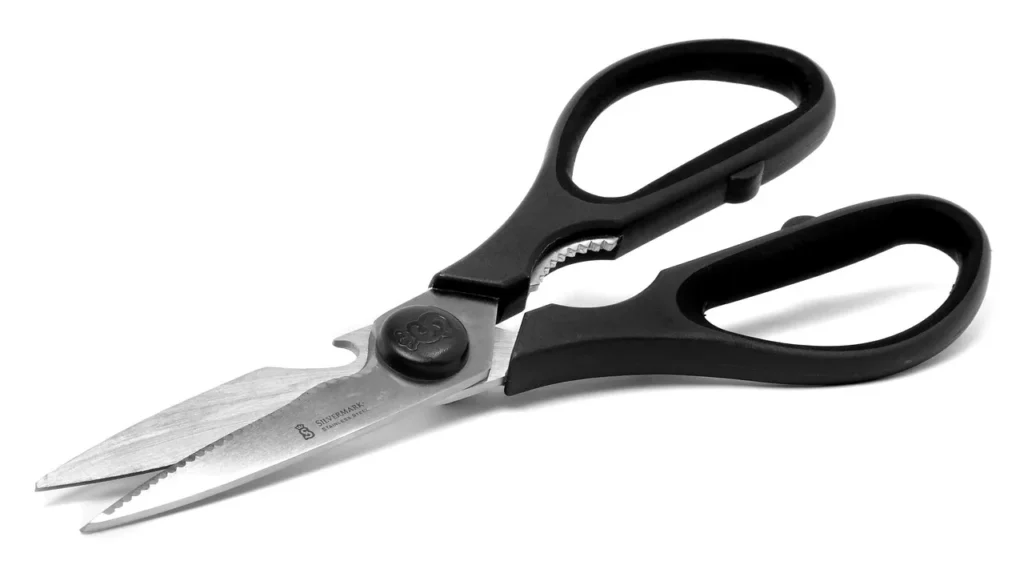
Kitchen Shears: Not a knife per se, but worth a mention – sturdy kitchen scissors are incredibly useful for tasks like snipping herbs, cutting dried chilies, or even breaking down a chicken (some people prefer cutting through poultry joints with shears instead of a knife). In Indian kitchens, shears are sometimes used to quickly cut leafy veggies (like a bunch of cilantro or green chilies) directly into the pot. They also make cleaning seafood easier (e.g., trimming fins off fish, or cutting through crab shells).
Steak Knives: These are used at the dining table for cutting cooked meat on your plate. In an Indian context, you might set them out when serving dishes like steak (for those who eat beef) or continental-style grilled meats, or even chops. They aren’t used for food prep, but it’s good to have a set if you frequently cook Western meals or thick cuts of meat that need slicing while eating (for most Indian curries, the meat is in bite-size pieces so regular cutlery suffices).
Source: https://www.istockphoto.com/photo/parsley-on-chopping-board-gm516021879-48080090
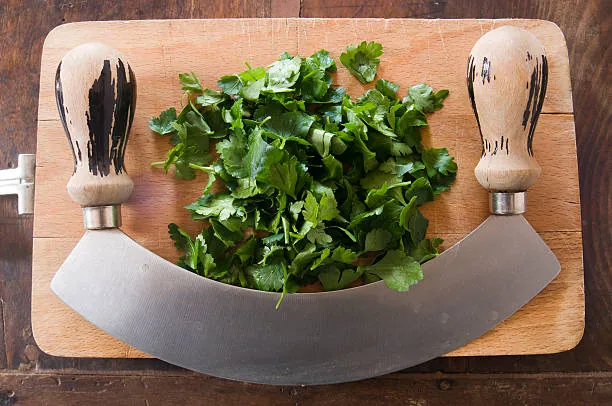
Clever Gadgets: Modern kitchens also have things like a mezzaluna (curved rocker knife) for herbs or pizza cutter wheels – these aren’t traditional but you might find them in some Indian homes now. And of course, there are electric knives (serrated blades that move automatically) which some use for slicing bread or meat, though those are still quite uncommon.
Traditional Boti: Circling back to the Indian traditional tool – if you ever visit a village or an old-style kitchen, you might see the boti in action. It’s essentially a stationary knife: a curved blade sticking upward from a base, sometimes people sit and use their foot to steady the base. They then pull vegetables or fish against the blade to cut. It’s very efficient once you know how – one can cut piles of greens or slice jackfruit quickly with a boti. Some Indian markets even sell a modernized version with a safety handle and board attached. While it’s a charming tool, it requires training and hasn’t made its way into modern mainstream kitchens. Still, it’s a testament to jugaad (innovative improvisation) in cooking history.
Source: https://www.amazon.in/Vegetable-Cutter-Kitchenware-Bengali-Kitchen/dp/B0CB9F6Y3Y
Always keep your knives sharp. A sharp knife actually is safer – it cuts cleanly and you don’t need to force it (which is when slips happen). Use a honing steel regularly to maintain the edge, and sharpen with a stone or get it professionally sharpened as needed. In Indian kitchens, a lot of people still use the old method of calling the knife sharpener guy (the one who pedals his grinding wheel on a bicycle) – it’s economical and effective for basic knives. Just be careful he doesn’t overly grind down your fancy knives at the wrong angles. Learning to use a simple sharpening stone or a pull-through sharpener could be a game-changer for keeping your tools in top shape.
Lastly, use the right knife on the right cutting surface – for example, don’t use your good knives on ceramic plates or marble countertops; use a wood or plastic cutting board to avoid dulling the blade. And try to avoid cutting very hard things (like frozen food or bone) with knives that aren’t meant for it – that’s how you get chips in the blade. Use the cleaver for bones, as mentioned, or at least a very sturdy old knife if you must.
Choosing and Caring for Your Knives
Investing in a quality set of 3-4 knives is a great start. High-carbon stainless steel blades offer a good balance of sharpness and durability. Most importantly, keep your knives sharp! A sharp knife is a safe knife. Consider learning how to use a honing steel or a sharpener at home. For more details, read our complete guide on how to sharpen your knives.
Always use your knives on a proper cutting surface like wood or plastic, not on marble or ceramic, to protect the blade. By selecting the right tool for the job, you make cooking safer, faster, and more enjoyable. Understanding these types of kitchen knives and their uses is the first step toward becoming a more confident and efficient cook. Happy chopping!